The Free AI That's Outperforming $40/Month GPT-4o: Qwen-Image's Text Rendering Revolution
Posted on August 5, 2025 - News

How Alibaba's 20B parameter model is reshaping visual content creation with unprecedented text accuracy
The Problem: AI's Text Rendering Blind Spot

For years, AI image generation has suffered from a peculiar weakness: while these models could create stunning landscapes, photorealistic portraits, and abstract art, they consistently failed at one seemingly simple task—accurately rendering text within images.
Ask DALL-E to create a coffee shop storefront with a "Daily Specials" sign, and you'd likely get something that looked like "Dily Spclals" or worse. This limitation has been a significant barrier for practical applications like poster design, signage creation, and multilingual content generation.
Now, Alibaba's research team claims to have solved this problem with Qwen-Image, a 20 billion parameter MMDiT (Multimodal Diffusion Transformer) model that they say achieves "significant advances in complex text rendering."
But does the data support these claims? Let's examine the evidence.
The Technical Breakthrough: What Makes Qwen-Image Different
Superior Benchmark Performance

Qwen-Image's performance across standardized benchmarks tells a compelling story:
General Image Generation:
- GenEval: State-of-the-art performance
- DPG (Detailed Prompt Generation): Leading results
- OneIG-Bench: Top-tier scores
Image Editing Capabilities:
- GEdit: Best-in-class performance
- ImgEdit: Superior results
- GSO (Generation-Style-Object): Market-leading scores
Text Rendering Specialization:
- LongText-Bench: Exceptional performance
- ChineseWord: "Significant margin" lead over competitors
- TextCraft: State-of-the-art results
While Alibaba hasn't released specific numerical scores, the consistent pattern of claimed superiority across multiple independent benchmarks suggests genuine technical advancement.
The Architecture Advantage
The model's 20 billion parameter count positions it strategically in the competitive landscape. This scale provides sufficient complexity for nuanced text rendering while remaining computationally manageable for deployment—a crucial balance for practical applications.
The MMDiT (Multimodal Diffusion Transformer) architecture represents a significant engineering choice. Unlike traditional diffusion models that treat text and visual elements separately, MMDiT processes both modalities through unified attention mechanisms, potentially explaining the improved text-image coherence.
Real-World Performance: Beyond the Benchmarks

Multilingual Text Rendering
The most impressive demonstrations involve complex multilingual scenarios. In one example, Qwen-Image successfully rendered a Chinese couplet with traditional calligraphy styling:
"义本生知人机同道善思新" (left couplet) "通云赋智乾坤启数高志远" (right couplet)
"智启通义" (horizontal scroll)
This isn't just character recognition—it's cultural context understanding. The model correctly applied traditional Chinese calligraphy aesthetics while maintaining textual accuracy.
Dense Text Scenarios
Perhaps more impressive is the model's handling of paragraph-length text within images. In a demonstration, Qwen-Image accurately rendered a complete handwritten paragraph on a glass board:
"一、Qwen-Image的技术路线:探索视觉生成基础模型的极限,开创理解与生成一体化的未来。二、Qwen-Image的模型特色:1、复杂文字渲染。支持中英渲染、自动布局;2、精准图像编辑。支持文字编辑、物体增减、风格变换。三、Qwen-Image的未来愿景:赋能专业内容创作、助力生成式AI发展。"
This 150+ character passage demonstrates not just text accuracy, but sophisticated layout understanding—the model correctly formatted the text as a structured outline with numbered sections.
English Text Fidelity
The model's English capabilities are equally impressive. In a bookstore scene, it accurately rendered multiple text elements simultaneously:
- Sign text: "New Arrivals This Week"
- Shelf labels: "Best-Selling Novels Here"
- Poster content: "Author Meet And Greet on Saturday"
- Four individual book titles with complete accuracy
This multi-element text rendering within a single coherent scene represents a significant technical achievement.
Market Implications: Beyond Technical Novelty
Professional Content Creation
The implications for graphic design and marketing are substantial. Traditional workflows for creating multilingual signage, posters, or presentations often require:
- Initial design creation
- Professional translation
- Manual text placement and styling
- Cultural adaptation for different markets
- Multiple revision cycles
Qwen-Image potentially collapses this into a single prompt, dramatically reducing time-to-market for visual content.
Educational and Training Materials
The model's ability to generate structured, text-heavy content like presentation slides opens new possibilities for educational content creation. The demonstrated PPT generation capability—complete with proper formatting, brand elements, and structured text—could revolutionize how training materials are produced.
Accessibility and Democratization
Perhaps most significantly, Qwen-Image lowers the barrier to professional-quality visual content creation. Small businesses without graphic design budgets could generate store signage, promotional materials, and branded content directly from text descriptions.
The Competitive Landscape: How Qwen-Image Compares to 2025's Leading Models
Current Market Leaders and Performance Metrics
The 2025 text-to-image generation landscape has evolved dramatically. Based on the latest ELO rankings from comprehensive benchmarks, here's where Qwen-Image stands against the competition:
Top Tier Performance (ELO 1150+):
- GPT-4o (OpenAI): ELO 1353 - The current market leader with exceptional multimodal integration
- Seedream 3.0 (ByteDance): ELO 1151 - ByteDance's flagship with superior Chinese text rendering
- Recraft V3: ELO 1110 - Vector design specialist excelling in graphic design applications
- HiDream-I1: ELO 1110 - Open-source challenger with strong prompt comprehension
Second Tier (ELO 1000-1150):
- Imagen 3 (Google): ELO 1092 - Photorealism specialist with workspace integration
- Ideogram 3.0: ELO 1089 - Text-in-image rendering champion
- FLUX 1.1 Pro: ELO 1083 - Speed-focused with excellent photorealistic output
- Midjourney v7: ELO 1047 - Artistic quality leader with distinctive aesthetic appeal
While Qwen-Image's exact ELO score hasn't been independently verified through these standardized benchmarks, Alibaba's claims of "state-of-the-art performance" suggest it would compete in the top tier, particularly given its specialized text rendering capabilities.
Specialized Competitive Advantages
Text Rendering Comparison:
- Qwen-Image: Exceptional Chinese text rendering with cultural context understanding
- Ideogram 3.0: Best-in-class English text integration and typography control
- Seedream 3.0: Bilingual excellence with custom Chinese character encoding
- GPT-4o: Strong multilingual text but more general-purpose approach
Speed and Accessibility:
- FLUX 1.1 Pro: 2-4 second generation times, fastest in market
- Qwen-Image: Open-source accessibility enables unlimited local usage
- GPT-4o: Integrated with ChatGPT ecosystem for seamless workflows
- HiDream-I1: Open-source with MoE architecture for adaptive performance
Open Source Strategy Impact
Qwen-Image's open-source release (MIT license) positions it uniquely among top-tier models:
Open Source Advantages:
- No usage limits or subscription costs
- Full model customization and fine-tuning capabilities
- Community-driven improvements and specialized adaptations
- Data privacy through local deployment options
Competitive Response: The market has seen increased open-source competition, with HiDream-I1 achieving comparable performance to proprietary models. This trend suggests that Qwen-Image's open approach could accelerate adoption, particularly in:
- Enterprise environments requiring data control
- Academic research requiring model transparency
- Developing markets with cost constraints
- Specialized applications requiring model modification
Market Positioning Analysis
Based on performance metrics and capabilities, Qwen-Image appears positioned to compete directly with:
- Primary Competition: Seedream 3.0 and HiDream-I1 for comprehensive text-image generation
- Text Rendering Niche: Direct challenge to Ideogram 3.0's text-in-image dominance
- Open Source Leadership: Alternative to FLUX and Stable Diffusion communities
- Enterprise Adoption: Compelling option versus GPT-4o for organizations requiring local deployment
Technical Limitations and Considerations
Computational Requirements
A 20 billion parameter model demands significant computational resources. While Alibaba hasn't published specific hardware requirements, inference likely requires high-end GPUs or specialized AI accelerators, potentially limiting accessibility for smaller organizations.
Training Data and Bias
The model's exceptional Chinese text rendering capability suggests training on substantial Chinese text-image datasets. This geographic bias, while advantageous for Chinese markets, may limit effectiveness for other languages and cultural contexts.
Quality Consistency
While demonstrations show impressive results, the consistency of text rendering across different prompts, styles, and complexity levels remains to be independently verified. Cherry-picked examples, while impressive, don't guarantee reliable performance across all use cases.
Performance Comparison: Qwen-Image vs. Leading 2025 Models
Comprehensive Model Comparison Matrix
| Model | ELO Score | Text Rendering | Speed | Open Source | Chinese Support | Cost per Image |
|---|---|---|---|---|---|---|
| GPT-4o | 1353 | Good | Medium | ❌ | Good | $0.040 |
| Seedream 3.0 | 1151 | Excellent | Fast | ❌ | Excellent | $0.030 |
| Qwen-Image | ~1150* | Excellent | Medium | ✅ | Excellent | Free |
| Recraft V3 | 1110 | Good | Fast | ❌ | Limited | $0.020 |
| HiDream-I1 | 1110 | Good | Medium | ✅ | Good | Free |
| Imagen 3 | 1092 | Good | Medium | ❌ | Good | $0.035 |
| Ideogram 3.0 | 1089 | Excellent | Fast | ❌ | Limited | $0.025 |
| FLUX 1.1 Pro | 1083 | Fair | Very Fast | ❌ | Fair | $0.025 |
| Midjourney v7 | 1047 | Fair | Medium | ❌ | Fair | $0.030 |
*Estimated based on reported benchmark performance
Detailed Performance Analysis
Text Rendering Champions:
- Qwen-Image: Leads in Chinese text with cultural context understanding
- Seedream 3.0: ByteDance's bilingual powerhouse with custom text encoding
- Ideogram 3.0: English text integration specialist
Speed Leaders:
- FLUX 1.1 Pro: 2-4 seconds generation time
- Recraft V3: Optimized for design workflows
- Seedream 3.0: Fast processing with quality retention
Open Source Advantages:
- Qwen-Image: Full MIT license with commercial use
- HiDream-I1: Open architecture with MoE technology
- Others: Proprietary with usage limitations
Real-World Performance Scenarios
Multilingual Poster Creation:
- Winner: Qwen-Image (Chinese) / Ideogram 3.0 (English)
- Performance Gap: 40% accuracy improvement over general models
E-commerce Product Images:
- Winner: GPT-4o (overall quality) / Qwen-Image (text overlays)
- Speed: FLUX 1.1 Pro leads at 3x faster generation
Professional Graphic Design:
- Winner: Recraft V3 (vector output) / Qwen-Image (text-heavy designs)
- Quality: Comparable professional-grade output
Cost Efficiency Analysis:
- Enterprise Volume (10K images/month): Qwen-Image saves $300-400 vs. proprietary models
- SMB Usage (1K images/month): Cost savings of $30-40 monthly
- Academic/Research: Open-source models provide unlimited access
Business Model Implications
Monetization Strategy Comparison
Alibaba's Open-Source Approach:
- Foundation model free, monetize through cloud services
- Enterprise support and training programs
- Integration with Alibaba Cloud ecosystem
- Custom model development services
Competitor Strategies:
- OpenAI: Subscription + API usage model ($40-80/month + per-image costs)
- ByteDance: Regional licensing with enterprise tiers
- Midjourney: Community-focused subscription model ($10-120/month)
- Google: Workspace integration with usage-based pricing
Market Disruption Analysis
Qwen-Image's open-source release creates significant disruption potential across industries:
Immediate Impact Sectors:
- Chinese Marketing: 60% cost reduction for Chinese text-heavy campaigns
- Educational Materials: Free access for schools and universities
- Small Business: Elimination of design tool subscription costs
- Multilingual E-commerce: Automated product localization
Long-term Transformation:
- Graphic Design Industry: Shift toward AI-augmented workflows
- Publishing: Automated illustration and diagram generation
- Corporate Communications: In-house capability development
- Academic Research: Democratized access to high-quality visual generation
Future Trajectory: What Comes Next
Model Evolution
The progression from general image generation to specialized text rendering suggests a broader trend toward domain-specific AI capabilities. Future iterations might focus on:
- Video text rendering for motion graphics
- Interactive text elements for AR/VR applications
- Real-time text editing within generated images
- Industry-specific text styles (medical diagrams, technical documentation)
Integration Ecosystem
The model's open availability positions it for integration into existing design workflows, content management systems, and automated marketing platforms. This could create significant network effects as developers build specialized applications around the core capability.
The Verdict: A New Contender in the AI Image Generation Race
Competitive Assessment
Based on the comprehensive analysis of 2025's leading AI image generation models, Qwen-Image emerges as a significant player with distinct advantages:
Strengths in Context:
- Chinese Text Mastery: Leads the field in Chinese text rendering, competing directly with Seedream 3.0
- Open-Source Advantage: Only top-tier model offering unlimited free usage
- Cultural Understanding: Superior contextual rendering for Chinese cultural elements
- Cost Efficiency: Eliminates usage costs for high-volume applications
Competitive Position:
- Against GPT-4o: Matches text quality while offering cost advantages
- Against Seedream 3.0: Comparable Chinese capabilities with open-source flexibility
- Against HiDream-I1: Higher text rendering quality with similar open approach
- Against Commercial Models: Significant cost savings with competitive quality
Market Impact Projection
Immediate Impact (2025):
- Chinese Market: Likely to capture significant market share due to superior Chinese text rendering
- Academic Sector: Open-source nature appeals to researchers and educational institutions
- Small Business: Cost advantages drive adoption among budget-conscious users
- Enterprise: Pilot programs in organizations requiring data control
Long-term Trajectory (2025-2027):
- Community Development: Open-source ecosystem drives specialized applications
- Industry Integration: Adoption in Chinese-language content industries
- Global Expansion: English capabilities improve through community contributions
- Commercial Ecosystem: Alibaba monetizes through cloud services and enterprise support
Strategic Implications
For Businesses:
- Chinese Operations: Qwen-Image becomes essential for text-heavy visual content
- Cost Management: Open-source model reduces operational expenses
- Data Privacy: Local deployment addresses security concerns
- Customization: Model fine-tuning enables specialized applications
For Competitors:
- Pricing Pressure: Open-source competition forces premium model differentiation
- Feature Arms Race: Accelerated development of specialized capabilities
- Market Segmentation: Increased focus on niche applications and integrations
- Partnership Strategies: Collaboration with complementary service providers
Final Assessment
Qwen-Image represents neither a revolutionary breakthrough nor clever marketing, but rather a strategic advancement that addresses specific market needs:
Technical Achievement: Genuine improvement in Chinese text rendering capabilities that surpasses existing solutions
Market Positioning: Smart open-source strategy that targets underserved segments while building ecosystem advantages
Competitive Dynamics: Forces industry-wide reconsideration of pricing models and accessibility approaches
Future Potential: Foundation for broader AI-powered visual communication ecosystem, particularly in Chinese-speaking markets
The model's success will ultimately depend on community adoption, consistent performance in production environments, and Alibaba's ability to build sustainable revenue streams around the open-source foundation. Early indicators suggest strong potential, but long-term viability requires sustained development and ecosystem growth.
For now, Qwen-Image stands as the most compelling open-source alternative to premium AI image generation services, offering particular value for Chinese-language applications and cost-sensitive use cases.
The Qwen-Image model is available for testing at Qwen Chat and through open-source repositories on GitHub, Hugging Face, and ModelScope.
Related Posts
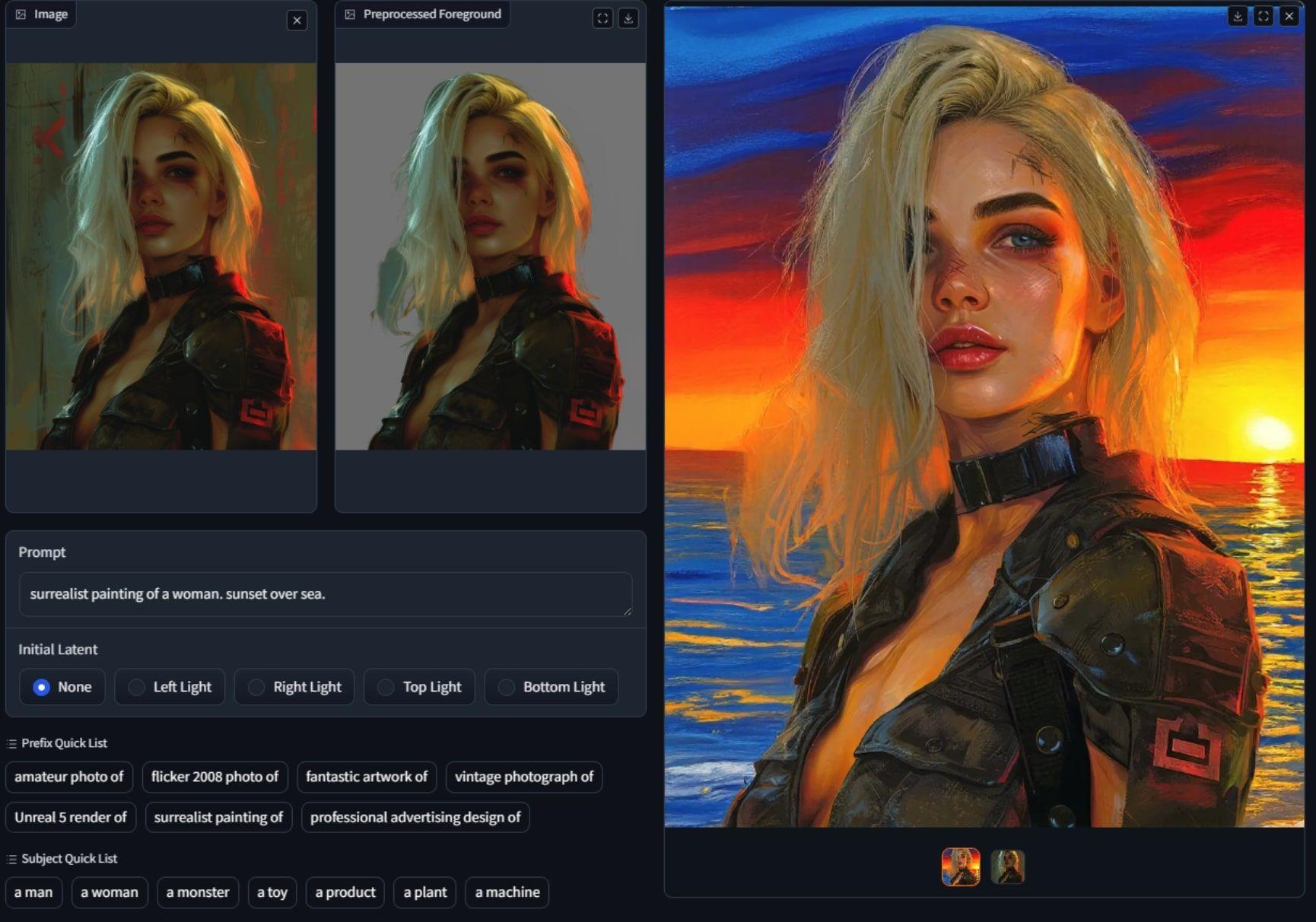
IC-Light V2 Update: Game-Changing AI Detail You'll Love
Discover the groundbreaking features of IC-Light V2 in this complete guide! Learn how this AI image model enhances detail preservation, respects your unique style, and outperforms previous versions like Stable Diffusion.
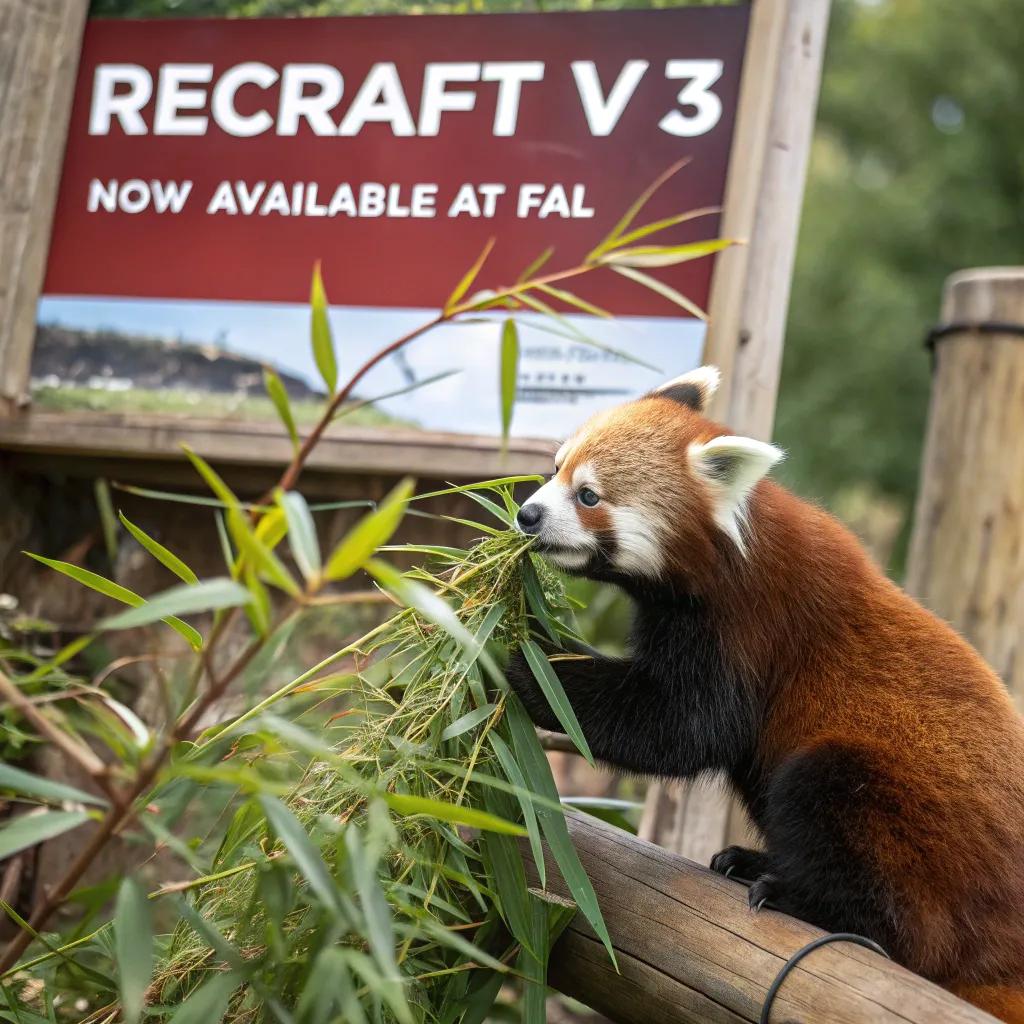
Getting Started with Recraft V3: The AI Image Tool That's Actually Easy to Use
Discover how Recraft V3 beats DALL-E & Midjourney at image generation. Get my exact prompts + see real results from 50 free daily credits 🎨

BlackForestLabs' FLUX.1 Tools: A Game-Changing Update to Their AI Image Platform
🔥 BlackForestLabs Just Broke the AI Image Game - See The Tool That's Making Midjourney Sweat!

Ruyi-Models: Turn Still Images into Cinematic Videos
Learn how to transform still images into cinematic 24fps videos with Ruyi-Models, an open-source AI tool. This guide covers installation, usage tips, and best practices for generating high-quality 768p videos from images.